Blog
My Photography Tips
Golden hour—at sunrise or sunset—offers magical light that’s perfect for your shots. Always carry a tripod to ensure stability and capture long exposures.
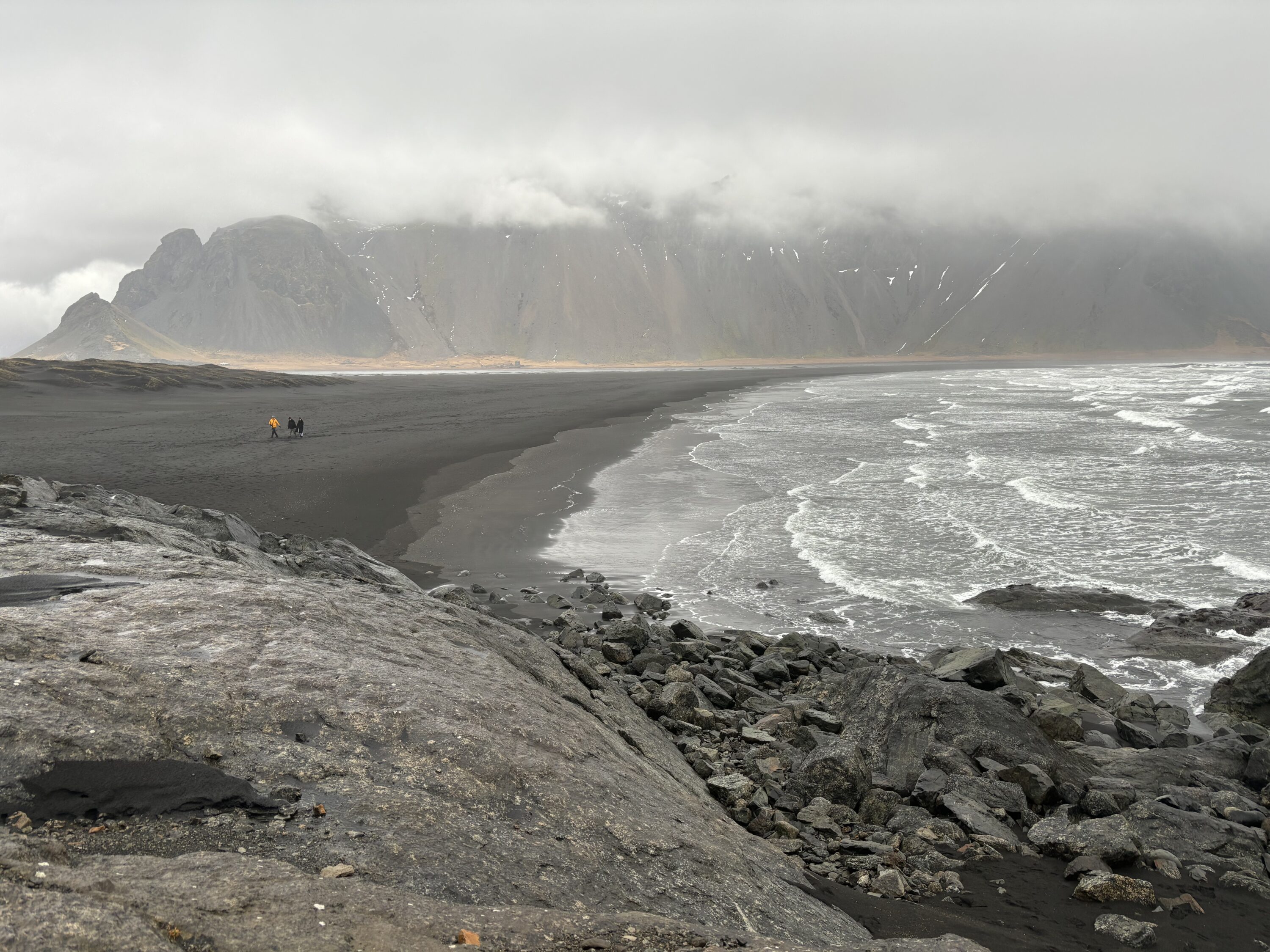
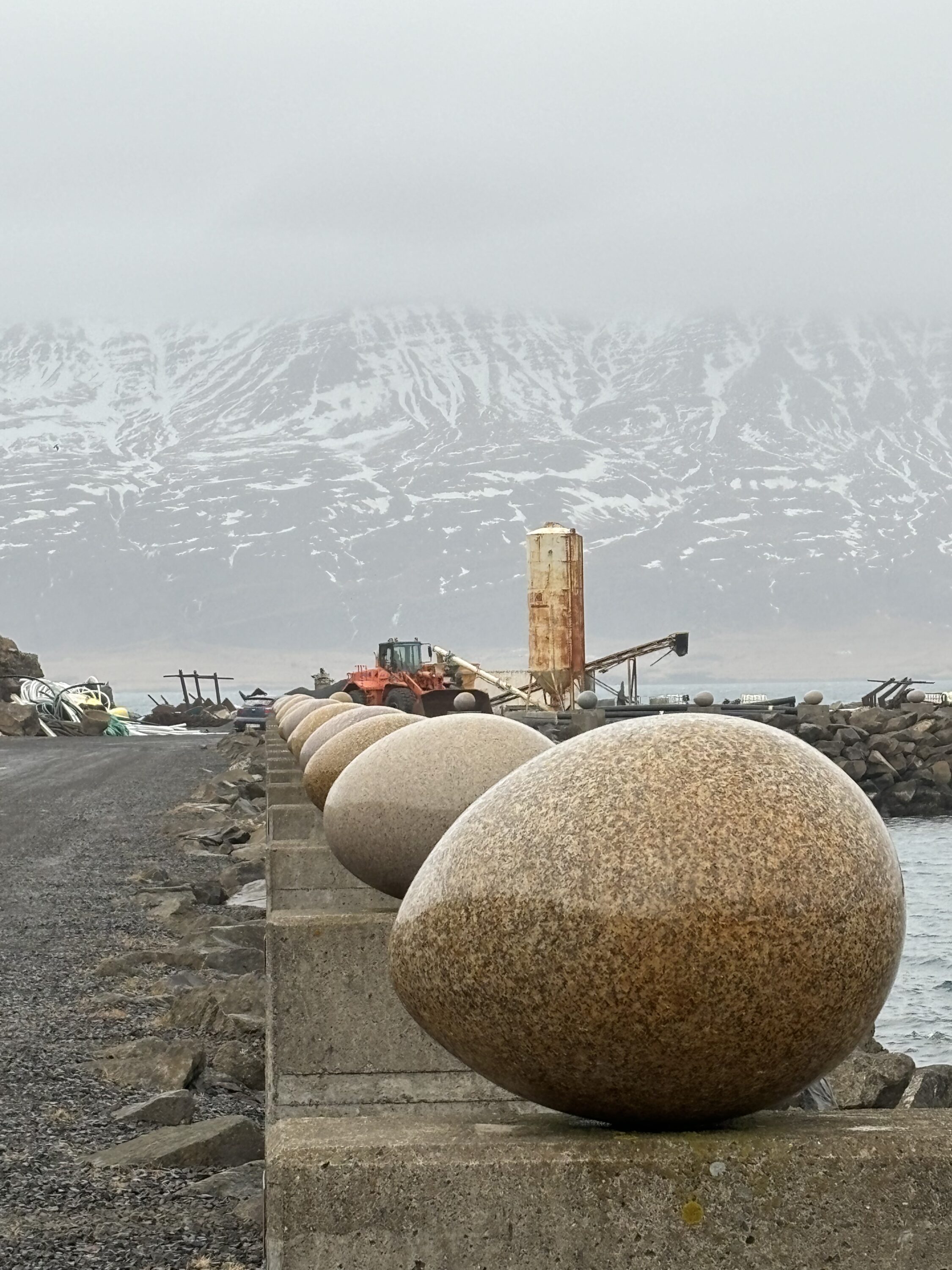
Pay attention to composition by applying the rule of thirds, using foreground elements, and natural lines that guide the viewer’s eye. Watch the horizon—if it’s tilted, it can disrupt visual balance. Don’t fear fog, storms, or dramatic lighting—they can be powerful allies.
Keep your ISO low to avoid digital noise, and edit subtly to enhance the image without altering its essence.
Protect your gear from sand, moisture, and rain—and above all, be patient and curious: the best photos are discovered with time and dedication.
The Essential Gear I Recommend
For a well-prepared photography trip, choose a lightweight mirrorless camera (such as a Sony Alpha, Canon EOS R, or Fujifilm X), easy to carry. Bring the essential lenses: a versatile standard zoom (24–70mm), a wide-angle (16–35mm) for landscapes, and a telephoto (70–200mm) for distant scenes. A compact, stable, and lightweight tripod will be your ally for long exposures or night photography.
Don’t forget filters: a polarizer to reduce reflections and an ND filter for long exposures.
Always carry spare batteries and memory cards. Protect your gear with a waterproof cover and microfiber cloths. A comfortable, durable camera backpack with quick access will make travel easier. Back up your images on an external hard drive or in the cloud.
A high-quality smartphone will be useful for capturing spontaneous moments or scouting locations in advance.
And finally, bring a notebook or an app to jot down ideas, locations, and settings.
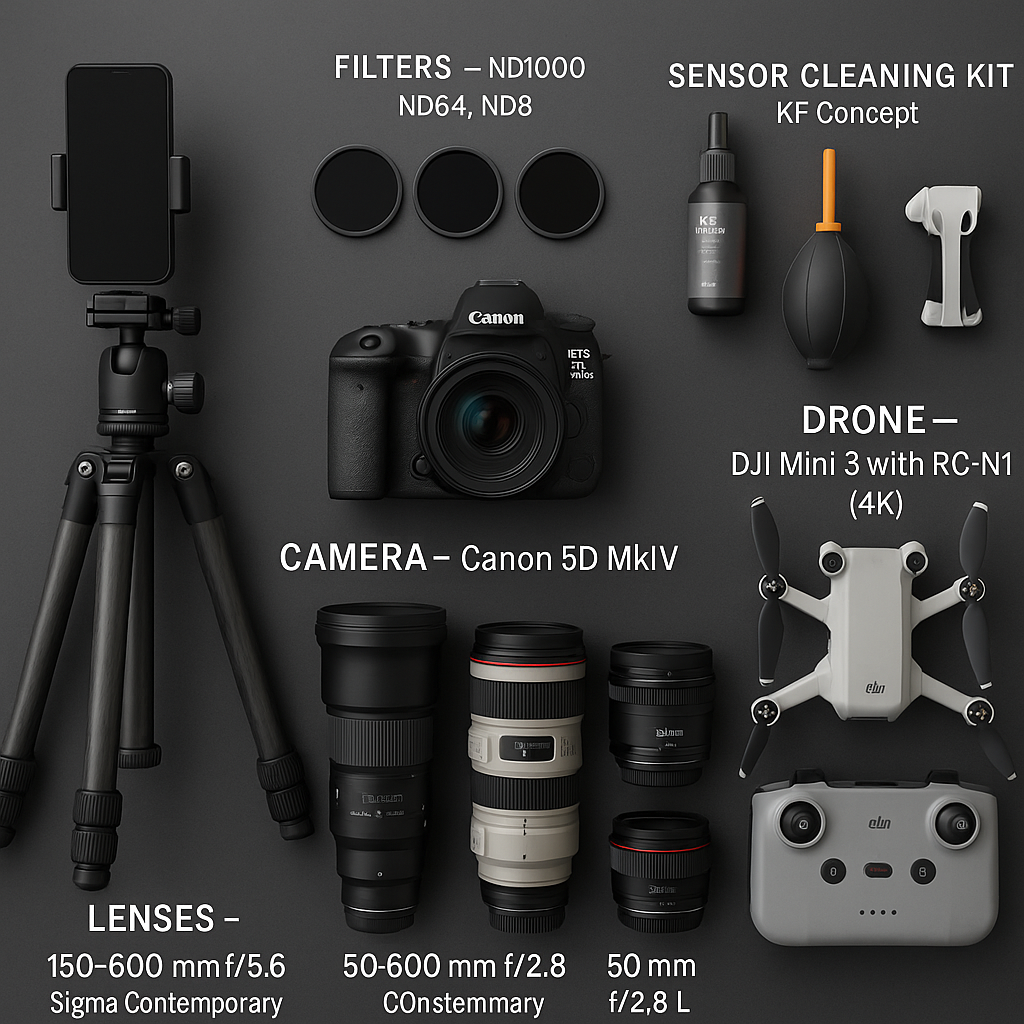
My equipment :
TRIPOD – Carbon – Leofoto LS324CEX
Smartphone Tripod – (under 1.5 kg)
FILTERS – ND1000, ND64, ND8
SENSOR CLEANING KIT – KF Concept
CAMERA – Canon 5D MkIV
LENSES –
150-600 mm f/5.6 Sigma Contemporary
70-200 mm f/2.8 Canon
24-70 mm f/2.8 Canon L
50 mm f/1.2 Canon L
24 mm f/2.8 Samyang
DRONE – DJI Mini 3 with RC-N1 (4K)